



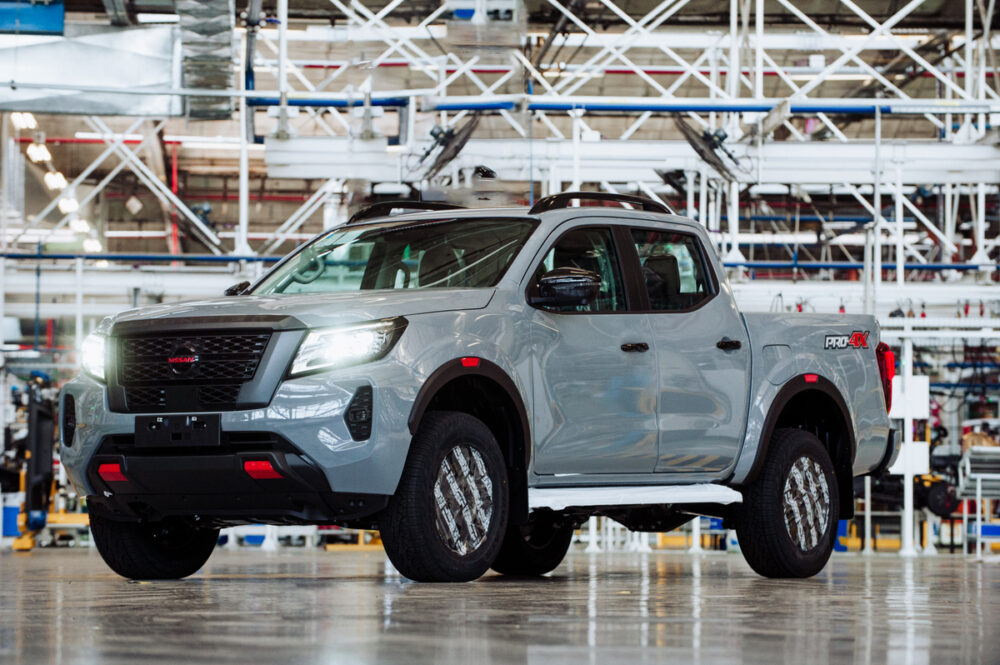
Tal como es de publico conocimiento, hace unos meses atras Nissan Argentina anuncio que cierra su planta en nuestro país y por consecuencia la Pick up Frontier dejara de producirse, en su reemplazo y para abastecer a nuestro pais la marca tenia como opcion traerla importada desde su planta en Mexico, pero en las ultimas horas el prestigioso medio de comunicación Automotive News alerto sobre los planes de Nissan de cerrar la Planta Civac.
Nos preguntamos entonces: ¿dejara de estar en nuestro mercado? Todo indica que se mudará a la Planta Compas. Es otro centro industrial que Nissan tiene en Aguascalientes
En la actualidad, la Planta Compas produce los modelos Infiniti QX50, Infiniti QX55 y Mercedes-Benz Clase GLB, pero se encuentra en medio de una reconversión tras el enfriamiento de la alianza entre Renault-Nissan y Mercedes-Benz.
En caso de que se libere la capacidad industrial de la Planta Compas, podría comenzar la mudanza de la línea de producción de la Frontier/Navara desde Morelos hacia Aguascalientes.
La Planta Civac hoy apera a sólo un tercio de su capacidad industrial, mientras que las dos fábricas de Aguascalientes se encuentran cercanas al 79% de sus posibilidades.
Todos estos cierres, cambios y mudanzas en los centros industriales deberían llegar justo a tiempo para el lanzamiento de la nueva generación de la Frontier/Navara.
Del mismo modo en que ocurrió con la Fábrica Santa Isabel en Córdoba, Nissan padece su propia crisis financiera interna. Pero, además, todavía sufre los coletazos de la fallida alianza con Mercedes-Benz, que que se desencadenó a partir de la cancelación de la pick-up Clase X.
A pesar de ser una fábrica anticuada, la Planta Civac de México podría tener un futuro bajo otra empresa. Automotive News citó a fuentes cercanas con la negociación acerca de una posible compra del establecimiento por parte de marcas chinas como BYD y Saic.
El informe completo de Automotive News sobre los planes de cierre de la Planta Civac en México se publica acá abajo.
Nissan shutting Mexico plant that was company’s first outside Japan by early 2027
By Urvaksh Karkaria
Nissan Motor Co. plans to shrink its industrial footprint in Mexico by ending production at two assembly plants, including a manufacturing joint venture with Mercedes-Benz.
According to two people with knowledge of the matter, Nissan is expected to shut down its nearly 60-year-old Civac plant in south-central Mexico no later than March 2027, the end of the Japanese carmaker’s business year.
Additionally, Nissan is expected to dissolveits COMPAS joint venture with Mercedes after crossover production at the 2.37-million-square-foot factory in Aguascalientes, Mexico, concludes early next year.
Nissan will end production of two Infiniti crossovers at the COMPAS plant in late 2025. Mercedes will halt GLB crossover production in the first quarter next year, according to AutoForecast Solutions.
Nissan manufactures the Navara and Latin America Frontier pickups at Civac, which was the company’s first manufacturing operation outside Japan. According to a source, Nissan will consolidate production from Civac at two company-owned factories in Aguascalientes, about 365 miles northwest.
Chinese automotive juggernauts such as BYD and SAIC could be interested in Civac as they seek North American capacity to fuel high-octane growth plans.
The factory closures are part of a global manufacturing retrenchment for Nissan as its global sales have plunged nearly 40 percent since before the pandemic.
Facing its largest financial loss in a quarter-century, Nissan plans to shutter seven assembly plants and cut capacity by nearly 30 percent to 2.5 million vehicles by the 2027 fiscal year. The company has said sites in Japan, India and Argentina will close, and it’s also expected to close factories in Thailand and South Africa.
Spokesperson Brian Brockman said Nissan is reviewing the integration and closure of some of its global production sites: “However, this process has not yet been concluded,” Brockman said. “If any decisions are made, we will provide information at the appropriate time.”
The 4.4-million-square-foot Civac factory in Jiutepec is outdated and no longer cost-effective to operate, a source told Automotive News. The assembly plant has been a cornerstone of the automaker’s global expansion. It opened in 1966 with a single production line that built the Datsun Bluebird. In 1972, Nissan started exporting vehicles from Civac, which has built more than 6 million vehicles and created thousands of jobs in the decades since.
According to AutoForecast Solutions, Civac last year produced 80,000 pickups and operated at less than a third of its capacity. This year, Nissan plans to build 57,000 vehicles there, a fraction of the 294,000 units the plant assembled in 2016.
In March, Nissan said it would end Frontier production at a Renault-operated factory in Córdoba, Argentina, and consolidate Latin American pickup production at Civac. By year’s end, Nissan will reduce the Mexico plant from two assembly lines to one, a source said.
In response to President Donald Trump’s 25 percent tariff on Mexican-made cars, Nissan has stopped building unprofitable trims of the Sentra and Kicks for the U.S. market, freeing capacity in Aguascalientes to absorb Civac production. It plans to discontinue U.S. sales of the Versa next year, creating additional room in Aguascalientes.
AutoForecast Solutions said Nissan’s two Aguascalientes factories are operating at 79 percent of their capacity and can absorb the pickups from Civac.
While financially troubled Nissan cannot afford to operate an underutilized plant such as Civac, the automaker will be walking away from a hefty investment and a skilled workforce built over decades. Closing Civac also is politically sensitive, given its heritage and economic significance. Last year, Mexico accounted for 20 percent of Nissan’s North American sales.
A deal with Honda, which reportedly is interested in building a Frontier-based pickup for the U.S. market, could have ramped up Civac’s assembly lines, a source said. However, Trump’s tariffs on Mexican imports have made that unlikely.
AutoForecast Solutions Vice President Sam Fiorani said Civac would present an “economical first step to local production” for a Chinese automaker.
“A brownfield plant would require an investment in the hundreds of millions of dollars rather than the billions of dollars needed for a greenfield plant,” Fiorani said. “A ready-and-willing and trained workforce would be a highlight of such an acquisition.”